







Keep up with what’s new.
Connect with us on LinkedIn for news, insights and related topics.

Recover waste pressure
Refining, petrochemical, and renewable processes rely on networks of natural/fuel gas to produce heat and hydrogen for complex processes. As gas is transported between units, high-pressure flows are typically reduced using control valves—resulting in wasted pressure energy.

Drive electrical generation
EHT replaces these valves with a high-speed turboexpander system that generates electricity during the pressure letdown process. Energy is recovered from within the refinery itself and can be used to help offset the facility’s hydrocarbon-based power needs.

Output cleaner energy
A moderate-sized refinery processing 200,000 barrels per day can use EHT to generate up to 500 kilowatts.(2) This not only improves energy efficiency but also reduces reliance on volatile commodity markets, helping operators improve margin predictability.
Join us for an exclusive webinar hosted by Honeywell UOP & Sapphire on August ##. Learn how EHT is integrated into natural gas systems in refineries and petrochemical plants to aid in the potential recovery of wasted pressure energy that can be used to generate cleaner energy.
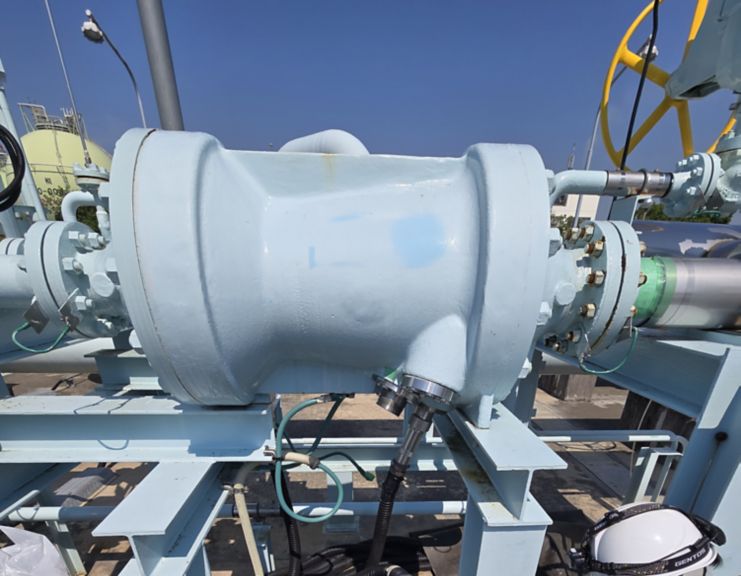
Previously deployed across upstream, midstream, and LNG regasification facilities, UOP is now offering EHT for installation within the refinery or petrochemical plant to convert wasted pressure energy into clean, reliable electricity.(3) This allows operators to reduce their operational power footprint, enhance uptime, and take meaningful steps toward decarbonization—all while enhancing the reliability of their existing operations.
Magnetic Reliability
The magnetic bearings in EHT are more reliable, can help reduce operating costs, and may aid in expanding machine operating parameters. Magnetic bearings allow the dynamic components of the EHT to operate in a levitated condition, consuming less energy and reducing the need for maintenance as compared to conventional bearings.
No Mechanical Seals
The patented design of EHT eliminates the traditional mechanical seal between the expansion turbine and generator.
Process Monitoring
In addition to energy recovery, the EHT provides advanced real-time diagnostic data through high-speed internal sensors that sample gas flow thousands of times per second.(4) This level of precision enables earlier detection of anomalies, improved proactive maintenance, and greater overall system uptime—critical for refining and petrochemical operations that cannot afford unexpected shutdowns.
Trusted, Proven, and Certified
The EHT system is ATEX-certified to help customers/operators comply with safety and reliability requirements for their critical infrastructure applications. Sapphire Technologies brings extensive experience deploying pressure energy recovery systems in environments that demand high uptime, low maintenance, and seamless integration.
Pre-packaged solutions are useful in the industrial landscape because they create cost-effective and scalable projects. By packaging EHT on a pre-engineered skid, operators can significantly reduce installation time, minimize disruption, and ensure high quality through pre-qualified vendors. This approach is particularly valuable in refinery and petrochemical assets, where efficiency and rapid deployment is critical.
EHT offers substantial economic benefits by converting waste pressure into valuable energy, enhancing operational efficiency, and reducing costs for refineries and petrochemical plants. As industry pursues ways to responsibly operate their assets, Honeywell UOP will be there to facilitate a transition to more sustainable operations while also enhancing overall environmental responsibility.
(1) If the generated electricity is used to offset power derived from the combustion of fossil fuels this can result in a positive impact on one’s CO2 emissions. The generated electricity meets the requirements for net-zero lifecycle greenhouse gas emissions under ISO 14040, 14044, and 14067 standards.
(2) Based on an example EHT design which considers 3.5 kilograms of natural gas use per second, at an inlet temperature of 70 degrees Celsius, at an inlet pressure of 600 psi-g, at an outlet pressure of 200 psi-g, and at a molecular weight of 16. Calculated via Sapphire Technologies’ Power Generation Calculator. Outputs may differ based on the design/specifications of a particular refinery.
(3) The generated electricity meets the requirements for internationally recognized methodologies for the certification of these instruments, including United Nations’ ACM0012 methodology for waste energy recovery.
(4) Khatri, R.K.; Hawkins, L.A.; Bazergui, C. Demonstrated Operability and Reliability Improvements for a Prototype High-Speed Rotary-Disc Atomizer Supported on Active Magnetic Bearings. ASME Turbo Expo 2015.
Get in Touch with our technical experts

Did you know that your internet browser is out of date?
Your browser is out of date, and may not be compatible with our website.
Just click on the icons to download a compatible browser.
By closing this window you acknowledge that your experience on this website may be degraded.